Research lines

Gravity Currents Beyond Darcy Dynamics
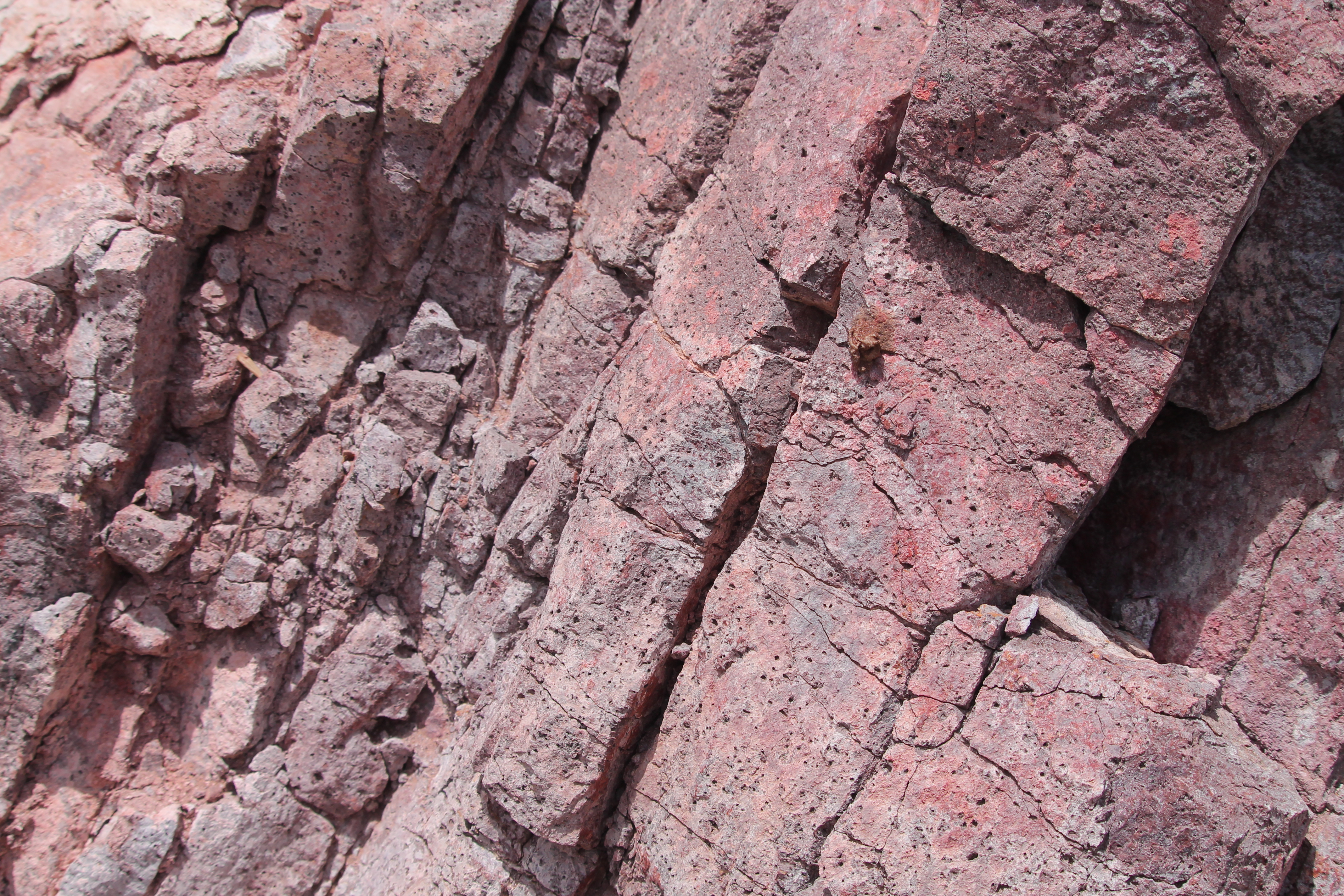
This research investigates gravity-driven free-surface flows, with emphasis on the propagation of gravity currents in porous media. The work examines how rheology, inertia, permeability, and finite-domain effects modify classical spreading laws and drive transitions between viscous, inertial, Darcy, and non-Darcy regimes. The approach combines theoretical modeling, similarity solutions, numerical simulations, and laboratory experiments to characterize transient front dynamics and regime-dependent propagation.
Fingerprints of Disorder in Fractured-Media Transport PROCESSES
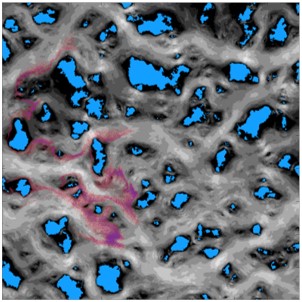
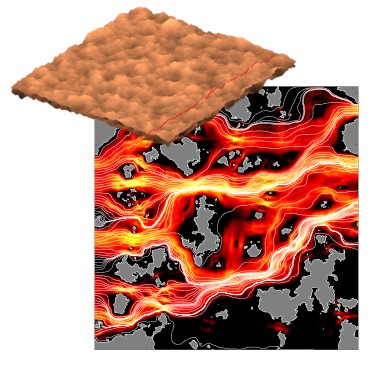
This research investigates anomalous transport in fractured geological media, focusing on how fracture-scale heterogeneity and fracture–matrix exchange shape macroscopic transport behavior. Aperture disorder in rough fractures produces preferential flow channels, intermittent Lagrangian velocities, broad travel-time distributions, and non-Fickian breakthrough curves. In heat and solute transport problems, exchange with the surrounding matrix introduces memory effects and nonlocal dynamics that control late-time behavior. The work develops stochastic upscaling models that link geometric disorder, Lagrangian velocity statistics, and matrix-exchange processes to predictive descriptions of breakthrough curves, displacement moments, effective dispersion, and thermal transport.
Rheology, Inertia, and Flow Localization in Geological Media
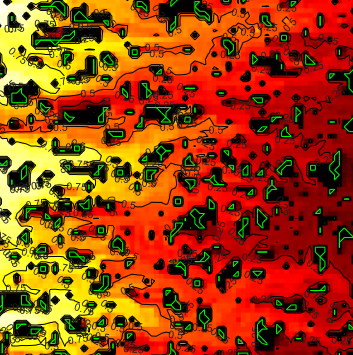
This research investigates flow regimes that depart from classical linear Darcy or Reynolds descriptions, including shear-thinning rheology, elastic-fracture backflow, gravity-driven propagation, and Forchheimer-type inertial effects. The work combines theoretical models, generalized nonlinear flow equations, finite-volume simulations, Monte Carlo analysis, and laboratory experiments to quantify how fluid rheology, aperture disorder, and porous-medium structure control effective transmissivity, flow localization, and macroscopic flow laws.
ONGOING Project
GEONEAT
GEONEAT is a Marie Skłodowska-Curie Actions Global Fellowship focused on flow, heat transfer, and inverse modeling in fractured geological media. The project investigates how complex fluids can enhance heat extraction and improve the characterization of subsurface reservoirs. The research combines theoretical modeling, stochastic upscaling, numerical simulations, and data-driven inference to link pore- and fracture-scale processes with effective reservoir-scale behavior.
Programme: Horizon Europe – Marie Skłodowska-Curie Actions
Grant Agreement: 101111216
EU Contribution: €265,099.20
Project period: 01/03/2024–28/02/2027
Host institution for the Outgoing Phase: Stanford University, US
Host institution for the Secondment: Geosciences Rennes, CNRS – University of Rennes, FR
Beneficiary Institution: University of Bologna, IT
International Collaborators: Daniel M. Tartakovsky, Yves Méheust
Role: MSCA Global Fellow, project proposer and lead researcher
Previous Project Involvement

StopUP
Protecting the aquatic environment from urban runoff pollution
StopUP aimed to reduce pollution from urban runoff by improving the understanding of pollutant sources and pathways, and by developing monitoring, treatment, and decision-support tools for Sustainable Drainage Systems.
Framework Programme: Horizon Europe
Role: Postdoctoral Researcher
GST4Water
Green-Smart Technology for Water
GST4Water developed hardware and software solutions for the sustainable management of water resources, with a focus on monitoring, reuse, and optimisation of water consumption at building and urban scales.
Programme: POR FESR Emilia-Romagna 2014–2020
Role: Predoctoral Fellow

Brigaid
Bridging the Gap for Innovations in Disaster Resilience
BRIGAID supported the development and uptake of innovations for resilience to floods, droughts, and extreme weather, with the aim of connecting technology developers, end users, and adaptation needs.
Programme: Horizon 2020
Role: Unit Member
MAR2PROTECT
Protecting groundwater from climate and global change effects
MAR2PROTECT is a Horizon Europe project focused on preventing groundwater contamination related to global and climate change through innovative managed aquifer recharge technologies and AI-supported decision tools.
Programme: Horizon Europe
Role: Unit Member
 Alessandro Lenci